

The Uphill Battle for Alternative Candidates
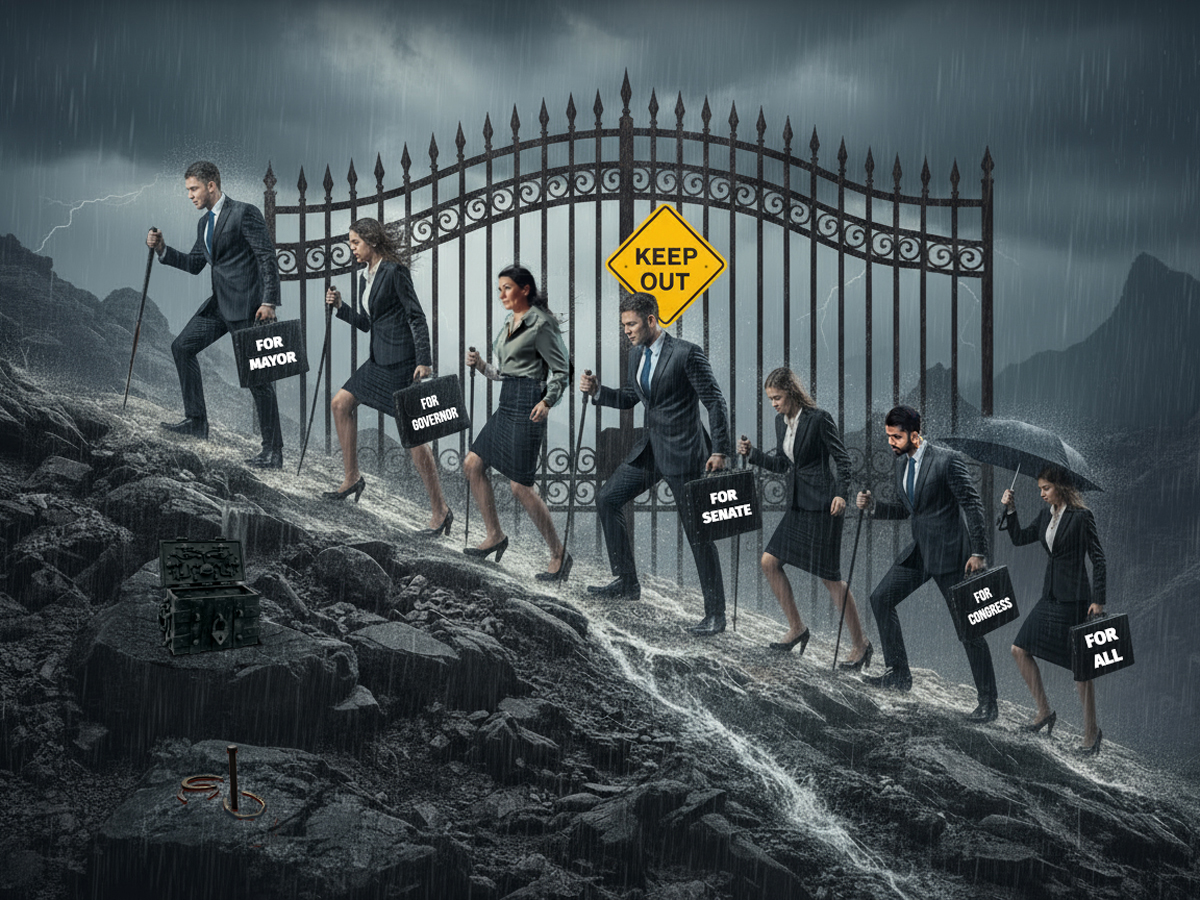
Whether true or false, fair or unfair, perception is reality. And politics is no different. The establishment knows this—and spends millions shaping how voters feel about who’s “viable.” Both major parties use narrative control, media bias, and ballot barriers to steer citizens away from alternatives that might actually represent them.
The result? Most voters never get to see credible choices beyond the party line. Yet over 63% of Americans say a new major party is needed because the current two do such a poor job. The problem isn’t lack of interest—it’s lack of visibility.
At FiNC, we’re changing that. We standardize fairness and visibility so every candidate—inside or outside the system—gets a fair shot to be seen and judged by citizens, not gatekeepers. Because representation isn’t a feeling—it’s a function of access.
How Third-Party Candidates Are Treated Like Second Class
JUST GETTING ON A BALLOT IS A CHALLENGE: Elections start with access. Gatekeepers made ballot entries deliberately complex. Major-party nominees appear on every state ballot by default. Third-party hopefuls have to scramble to collect petition signatures in tight windows, navigate forms, fees, and legal challenges all while bleeding cash, time, and resources until their campaigns collapse before most voters even notice.
DEBATES FOR ME, BUT NOT FOR THEE: The debate stage is one of democracy’s loudest microphones. Yet, like a country club, both parties’ Commission on Presidential Debates restricts entry to only those that can match or exceed a 15% polling threshold, something that hasn’t been done in over 50 years. This is an effective tool the major parties use to essentially silence the message and severely limit exposure for third-party candidates.
THE MEDIA PLAYS THE GAME: In today’s ratings-obsessed legacy media, outlets chase the shiny object. Front-runners benefit from round-the-clock coverage which amounts to free advertising; Trump’s 2016 campaign famously reaped billions in earned media. Meanwhile, independents and third-party candidates are left on the periphery, often the subject of “spoiler” related stories, before they vanish from sight.
PARTIES CROWN THEIR KINGS: In 2016 and again in 2020, Bernie Sanders’ surging campaigns were quietly kneecapped as party leaders closed ranks to protect their chosen frontrunner. Rivals were coaxed to drop out, consultants warned not to cross the establishment, and donors steered toward “safe” bets. It’s the same pattern everywhere: no matter how low approval ratings fall, incumbents almost always win because the system protects itself. It isn’t merit—it’s maintenance—and it leaves little room for new blood or independent voices trying to serve citizens instead of the machine.
Digital Politics (DP)
How We Can Shift the Lens to Identify Rigged Patterns
UP/DOWN NOT LEFT/RIGHT: This fundamental understanding of what really matters when choosing a candidate is embedded in our mission here at FiNC. Abandon partisan thinking and ask yourself: Who do they actually answer to? Do they serve donors or citizens? How do they vote on the things that matter to you most?
DON’T JUMP TO CONCLUSIONS: Because candidates tend to start campaigning earlier than ever, certain names will attach themselves to your mind due to constant exposure. Reject the notion to go with someone you are familiar with as opposed to someone who really speaks to your values. Do some homework. If you dig through enough oysters, you are bound to find your pearl.
SEE THE PATTERN & CALL IT OUT: Share your awareness with others and show them where the cracks in our democratic armor are. Tell them how alternative candidates are routinely sidelined by the two-party system through ballot constraints, debate exclusions, and media blackouts.
WHAT YOU CAN DO: Find a candidate you resonate with who’s clearly people-first but underexposed. Learn their story, follow their channels, and amplify them online. Share one of their clips, quotes, or events each week so more voters actually see them. Visibility is currency—your post can reach thousands they’ll never meet. Help make sure at least one good voice cuts through the noise.
The Meta-Movement
Building Action Clusters to Give Underdog Voices a Shared Stage
We can’t change the rules yet, but we can change who gets heard. The Meta-Movement is where citizens, candidates, independent journalists, and reform orgs connect around actions, not parties. Through Action Clusters, people organize by issue—fair elections, healthcare, immigration reform—and coordinate spotlights on the candidates who actually serve citizens.
Right now, the goal is simple: amplify one down-serving candidate together. Share their interviews, events, or policy clips. Invite independent media to cover them. Post, tag, and cross-link across clusters so they can’t be ignored. When hundreds of citizens move in sync, visibility becomes power—and power finally tilts back toward the people.
Each cluster becomes a small civic amplifier—tracking who’s fair, who’s responsive, and who’s missing from the debate stage. These early connections form the wiring for Digital Democracy’s future rails: the shared system where every candidate is seen and every citizen is heard.
WHAT YOU CAN DO
Find one underdog candidate who’s clearly people-first. Follow them. Share their work weekly. One candidate at a time, we turn digital voice into democratic power.
Democracy only works when every voice can be seen and heard.
Digital Democracy (DD)
In order to cut through the avalanche of noise and distraction that plagues modern elections, simplicity and easy access to information is key for citizens to gain awareness of who is out there and the positions they take. Here are some of the ways FiNC is addressing this issue.
BALANCE THE SCALES – Every candidate will be featured in a side-by-side comparison, giving them all equal footing, without favor, to ensure voters the clearest most comprehensive understanding of their choices.
POLITICIAN REPORT CARDS – Think of this as a scorecard for democracy—not just what a candidate says, but what their record shows. We’re pulling from trusted public data to give you a clear snapshot: voting history, donor networks, special-interest ties, and how often their actions line up with their promises. When one voice starts to matter more than rules, the report card shifts the power back to citizens.
INDEPENDENT MEDIA HUB – A shared home where truth-telling journalism and outsider campaigns can finally meet. The hub will connect independent media outlets with credible stories, interviews, and coverage of underdog candidates—sources too often ignored or demonetized by mainstream channels. By standardizing access and visibility, it gives alternative voices the same digital stage as establishment power—so every journalist can speak freely, and every candidate can be seen on equal footing.
DESIRED OUTCOME – At FiNC, we believe money and influence form the most toxic mix in modern politics—and the only antidote is full visibility. The tools and measures we’re building help citizens see candidates in full: their record, their integrity, and their alignment with the people they serve—not the size of their war chest or the spotlight they’ve bought.
If you want to help lower the barriers that keep independent and grassroots candidates out of view, start small and start local. Find one candidate who genuinely represents your values, share their story, and invite others to take a look. Every post, mention, and share widens the stage for voices that have been shut out.