


The Lesser of Two Evils Trap: Remembering Past Elections and Exploring Solutions
Blog:
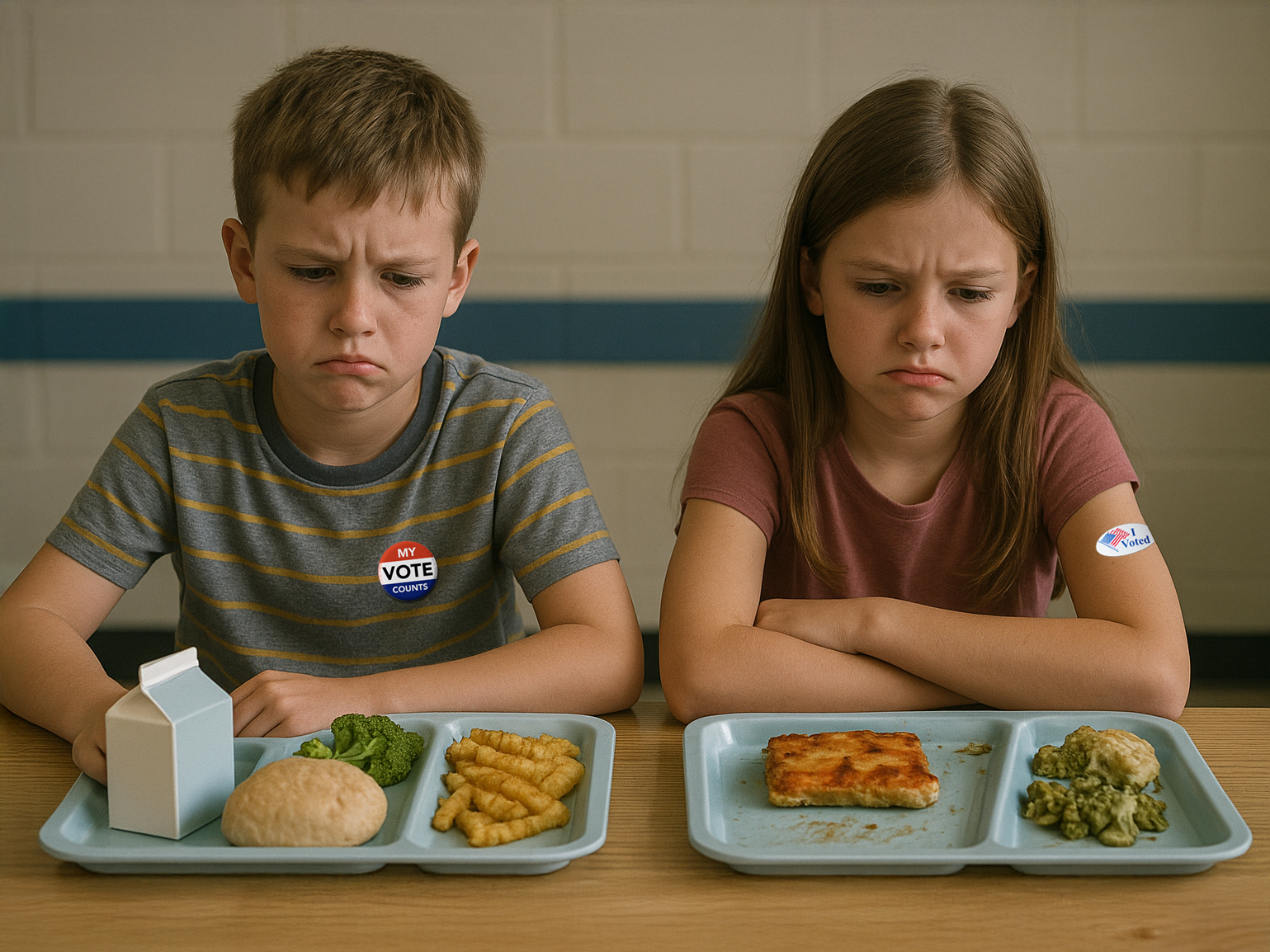
When you cast your vote, shouldn’t it be for your candidate—not just against the other one?
That question cuts across party lines and elections.
For many progressive and young voters, the 2016 election wasn’t about excitement—it was about damage control. Bernie Sanders’ campaign brought energy, grassroots authenticity, and a focus on real, “kitchen table” issues. He won 23 states and nearly matched Hillary Clinton in popular votes and delegates—all with the establishment stacked against him.
But the DNC had already decided who would wear the crown. Instead of trusting the public’s momentum, they chose a candidate they viewed as a safer investment. The party sidelined its own voters in favor of someone they believed would protect the status quo.
When the general election came, those same energized voters didn’t turn out in force for Clinton. Not because they didn’t understand the stakes—but because they did. They knew another four years of establishment politics wasn’t the future they wanted.
And so, once again, Americans were left choosing between the “lesser of two evils.” It wasn’t just a moment—it was a pattern. One that’s replayed every election cycle since.
Voters across the spectrum feel it. They want to participate. They want to believe their vote means something. But when both options are chosen for them, democracy starts to feel like a rigged game.
So here’s the real question:
What if there’s a way out of the trap?
What if there was a system designed so citizens could actually vote for the future they want—without the fear, manipulation, or “lesser evil” compromise?
How People Feel About The Two-Party System - By The Numbers
- People are feeling disillusioned with the two-party system being our only option – For the first time in US history, more voters identify as Independents rather than one of the two major parties. According to a recent Gallup poll, 43% of Americans identify as Independents, an historic high, leaving only 27% identifying as either Democrat or Republican, respectively. This is a trend worth watching.
- There is a deep lack of trust in Congress – Have you seen approval ratings lately? Despite record-low trust in Congress, incumbents keep winning. A July 2025 Quinnipiac survey shows that only 19% of Democrats and 33% of Republicans have a favorable view of Congress. Over the past 20 years, more than 9 in 10 House members and about 8 in 10 Senators seeking re-election have held their seats—regardless of party or public anger.
- Voters statistically being unrepresented by those in the two-party system – All this amounts to a whopping 63% of voters expressing the desire to have a viable third party, the highest tally of voter sentiment on this issue since Gallup began asking the question.
In essence, most Americans feel voiceless – convinced that the government serves the few, not the many.
Identify The Trap, So You Don’t Fall Into It
- A 2016 Pew survey revealed that many citizens find themselves voting against someone as opposed to voting for someone. Deb Otis, Director of Research & Policy at FairVote, said of a 2024 Citizen Data poll that showed 47% of Americans had voted for the “lesser of two evils” in at least one race on their ballot:
- “Americans want more choices at the ballot box, but they’re afraid of wasting their vote on a candidate who can’t win or supporting a potential ‘spoiler.’”
- Media is not innocent in this rigged game. Often used as the marketing for Establishment picks and promoting a “don’t waste your vote” narrative for non-establishment candidates, Media is far from the trusted source of news we want. The media and party insiders shape who we see as “electable” long before voters get a real look. They push certain candidates as the only “viable” options, pressuring people not to “waste” their vote. But electability is just a story they sell—it’s not real data. Don’t let that game decide your choice.
Here is How You Begin Breaking the Loop
Simply dividing candidates by Left vs Right, Dem vs Rep, does not spell out the whole story. At FiNC, we add another dimension: Up-serving vs Down-serving. This brings in the clarity of “who does my candidate serve? Power/donors (UP) or voters/people (DOWN). Simple questions to begin determining who they serve – who is funding this candidate? What/whose narrative are they telling me? And who benefits from their campaign?Digital Politics (DP) Reveals The Trap
Voting is one of the most important, fundamental duties citizens in a democracy can undertake. It should be a process that voters engage in with total confidence, and it should offer those voters a legitimate opportunity to uplift those candidates that align with their values and world view. Unfortunately, the powers that be use every tool at their disposal in order to corral voters toward their choices, all while creating the illusion that the choices you make are your own.
The Left vs. Right dynamic that dominates the thinking of most voters is a giant distraction that plays into the hands of those in control. When you start to reconfigure your thinking to Up vs. Down, you begin to cut through the noise and identify potential candidates based on their own merit, accountability, transparency, and record on the issues you care about most.
How DP Helps You Choose
- See Candidates as Up or Down Serving: Up-serving candidates protect insider advantage, are compromised by special interests, tow the party line, and seek to preserve the status quo. Down-serving candidates open access and show receipts. They tend to have smaller donor bases, are sensitive to what voters want, and aren’t afraid to break with their party on certain issues.
- Keep an Open Mind: Just because you’re a lifelong Republican or Democrat doesn’t mean you should default to whomever your party puts out there. Especially today, neither of the two major parties are places of purity. There are a lot of flavors to choose from, so do yourself a favor, and listen. Observe a candidate’s character, what drives them, to whom they are beholden, and then consider where they land on the issues.
- We want to hear from you! Post one Up/Down profile of a candidate, share your primary date, and send one “how to vote” link to a friend.
Make politicians answerable to the people again! By utilizing the Up vs Down dimension, we can begin to have better conversations around candidates and the policies they support.
The Meta-Movement: Cluster, Collaborate, & Counter
As the data has clearly shown, there is growing frustration among voters of both parties that comes from not being given ample choices and feeling that their representatives in government are skirting their responsibilities. There are precious few things we can rally around in these divisive times, but this is one of them.
It’s why the corporate news media works so diligently to maintain the wall of discord and animosity between us. It’s good business for the networks and it feeds the desire of the two major parties to consolidate power and never let it go.
If we can turn this shared frustration into shared action, it could change everything.
How It Works:
- We organize by Action Clusters—one cluster per policy stance, not per party. In big areas like immigration, healthcare, and the economy, each stance has its own cluster where citizens, independent media, movements, and underdog candidates coordinate. Join the stances you support, skip the ones you don’t—no labels required.
- These clusters will surface real-time, voter-led support around concrete actions. They let citizens, independent media, movements, and underdog candidates coordinate where they agree to act—and still disagree elsewhere. The result is visible momentum and accountability driven by people, not gatekeepers, so voices that are usually drowned out get amplified.
Digital Democracy (later): The Shared Space We’ll Build Together
- Equal visibility: every candidate, one place—no gatekeepers
- Politician Report Cards – funding, conflicts, record, and promise tracking in plain view
- Digital Primaries (with RCV-style voting): pick your true preference without fear of “spoilers”
- Alerts & archives: when they act, the public record updates
The Changes We Want To See
The power wielded by an informed electorate can be a disruptive force that, when organized and focused, can bypass the traps laid by the big-monied interests that keep the game rigged. When enough people know what to look for and where, the power in the hands of the Establishment begins to slowly crumble.
Once the government isn’t flooded with conflicts of interest, we will see legislation around flexible voting, money out of politics, open debates, and generally more accessibility for citizens to vote. But the key is “chicken or the egg”—what makes FiNC unique is that our core solutions don’t rely on the establishment putting a lock on their own cage. Change must come from the outside—with the citizens. Then we will elect better candidates that truly represent us.
Footnotes
- Gallup. (2024). Independents Outnumber Democrats, Republicans Again in 2023. Retrieved from https://news.gallup.com/poll/467881/independents-outnumber-democrats-republicans-again-2023.aspx
- Quinnipiac University. (2025, July). National Poll: Voters Sour On Congress. Retrieved from https://poll.qu.edu/poll-release?releaseid=3876
- Brookings Institution. (2023). Why Congress is so unpopular — and so reelected. Retrieved from https://www.brookings.edu/articles/why-congress-is-so-unpopular-and-so-reelected/
- OpenSecrets. (n.d.). Reelection Rates Over Time. Retrieved from https://www.opensecrets.org/elections-overview/reelection-rates
- Gallup. (2023). Support for Third U.S. Political Party at High Point. Retrieved from https://news.gallup.com/poll/472651/support-third-political-party-high-point.aspx
- Pew Research Center. (2016). 2016 Campaign: Strong Interest, Widespread Dissatisfaction. Retrieved from https://www.pewresearch.org/politics/2016/07/07/2016-campaign-strong-interest-widespread-dissatisfaction/
- Citizen Data. (2024). Poll on Voter Behavior in U.S. Elections (as cited by Deb Otis, FairVote). Summary and quote retrieved from FairVote blog: https://www.fairvote.org/the_spoiler_effect_is_real_voters_want_more_choices
- Columbia Journalism Review. (2020). How the media’s ‘electability’ obsession distorts democracy. Retrieved from https://www.cjr.org/analysis/electability-media-bias.php
- The Guardian. (2020). Electability is a myth – and it’s harming US democracy. Retrieved from https://www.theguardian.com/commentisfree/2020/feb/11/electability-is-a-myth-democrats
The Intercept. (2020). The “Electability” Trap Is an Establishment Strategy to Protect the Status Quo. Retrieved from https://theintercept.com/2020/02/10/electability-democratic-primary-media-narrative/